

 See My Latest Article on HelloNation
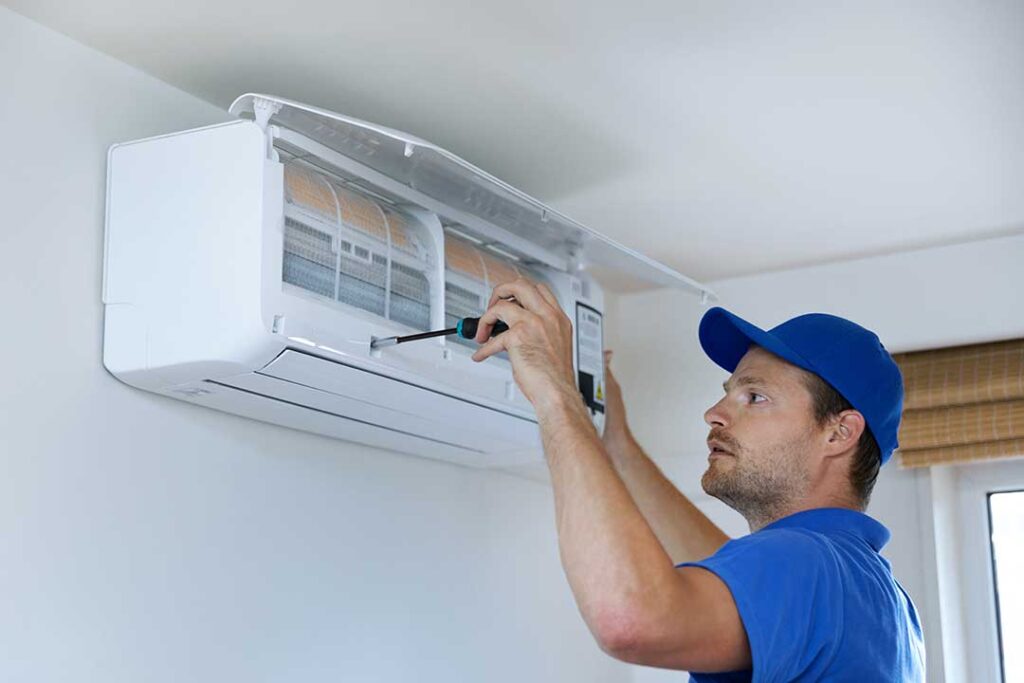
Air conditioners usually freeze because the indoor coil is not receiving enough warm air or because the system is operating with an abnormal refrigerant charge. Ice may appear on the copper refrigerant line, the indoor coil, or around the outdoor unit. Although the problem can look like a simple lack of cooling, continued operation can strain the compressor and cause water damage when the ice melts.
What does it mean when an air conditioner freezes up?
A frozen air conditioner has ice forming where it should not. The indoor evaporator coil is designed to absorb heat from indoor air. If the coil becomes too cold, moisture in the passing air can freeze on its surface. As the ice grows, it blocks airflow even further, causing the system to cool poorly and potentially creating more ice.
Common signs include:
- Weak airflow from supply vents
- Warm or only slightly cool air
- Ice on the refrigerant line or indoor coil
- Water around the indoor equipment after the ice melts
- A system that runs continuously without reaching the thermostat setting
- Unusual hissing, bubbling, or mechanical sounds
A small amount of condensation is normal during cooling. Solid ice is not.
Can a dirty air filter cause the system to freeze?
Yes. A clogged air filter is one of the most common and easiest-to-overlook causes. The filter collects dust and airborne particles, but if it becomes heavily loaded, it restricts the amount of warm household air moving across the evaporator coil.
With less air passing over the coil, the refrigerant can make the coil colder than intended. Moisture then freezes on the coil, eventually reducing airflow even more.
Filter life depends on the filter type, household dust, pets, renovation activity, and how often the system operates. During long, humid cooling seasons, area households may need to check filters more often than the replacement interval printed on the package suggests. A filter should be replaced if it is visibly coated with dust or if airflow is noticeably weaker.
A filter that is installed backward can also restrict airflow. The arrow on the filter should point in the direction of air movement, toward the indoor equipment.
How do blocked vents and ducts contribute to freezing?
Closed or blocked supply vents can reduce the total airflow through the system. Furniture, curtains, rugs, and stored items may also obstruct return grilles or supply registers. If the return side cannot draw enough air from the home, the coil may become too cold.
Leaking, crushed, disconnected, or poorly insulated ductwork can create similar problems. In homes with attics, crawl spaces, additions, or older duct systems, air may escape before it reaches the living area. A duct leak does not always produce an obvious sound; reduced comfort in certain rooms may be the first clue.
Keep supply vents open and clear, and make sure return grilles are not covered. If one room is consistently uncomfortable, that does not automatically mean the thermostat is faulty. The cause may be airflow imbalance, duct leakage, insulation gaps, or a restricted branch duct.
Does low refrigerant make an air conditioner freeze?
Low refrigerant can cause freezing, but adding refrigerant is not a complete diagnosis. A properly operating air conditioner does not normally consume refrigerant. If the charge is low, there is usually a leak or a previous installation or repair issue.
An undercharged system may have unusually low pressure and an evaporator coil that becomes too cold. Ice can form on the coil and refrigerant lines, while the equipment runs longer and delivers less cooling.
The system should be fully thawed before refrigerant readings are interpreted. Ice changes operating conditions and can make troubleshooting inaccurate. Refrigerant handling also involves environmental and safety requirements, so this is not a routine do-it-yourself adjustment.
Can a dirty evaporator coil freeze?
Yes. Dust, pet hair, and other debris can collect on the indoor coil and interfere with heat transfer and airflow. A dirty coil may become cold enough to freeze, especially when combined with a restricted filter or weak blower performance.
The indoor coil is often located inside the air handler or above a furnace, where it is not easy to see. Cleaning it may require access to panels and electrical components. Scrubbing the coil aggressively can bend delicate fins or damage nearby parts, so the condition should be assessed carefully.
A dirty outdoor coil usually causes a different problem. It can make the system run inefficiently and raise operating pressure, but it is not the same as a dirty indoor evaporator coil.
What other mechanical problems can cause ice?

Several equipment issues can reduce airflow or interfere with normal cooling:
- A weak or failing indoor blower motor
- A dirty blower wheel
- A malfunctioning capacitor
- A blocked condensate drain or drain pan
- A faulty metering device
- A damaged evaporator coil
- Thermostat problems that cause unusually long or improper cycles
A clogged condensate drain may not directly create the original ice, but it can cause water to back up after the ice melts. In humid conditions, standing water can damage ceilings, flooring, insulation, or nearby electrical components.
Low outdoor temperatures can also contribute. Running a conventional central air conditioner during unusually cool weather may cause the system’s pressure and coil temperature to fall outside normal operating conditions. Cooling systems are generally intended for warm-weather operation unless specifically designed for low-ambient use.
What should be done when ice is visible?
Turn the cooling setting off and set the thermostat fan to “On” if the blower is operating normally. This can help circulate room-temperature air across the coil and speed thawing. Do not scrape the ice with a tool, pour boiling water over it, or continue running the compressor while the system is frozen.
Check the filter and make sure return and supply openings are clear. Allow enough time for all ice to melt; a heavily frozen system may require several hours. Place a container or towels near areas where melting water could reach flooring or other materials.
If the system continues freezing after the filter is replaced and airflow is restored, the underlying cause may involve refrigerant, electrical components, the blower, ductwork, or the coil itself. Continued operation can worsen the damage, particularly if liquid refrigerant returns to the compressor or repeated thawing causes water to overflow.
Why is this issue especially noticeable during humid weather?
Warm, humid conditions provide abundant moisture for frost to form once a coil drops below freezing. Forest Acres households may notice the problem during long cooling periods when systems run for many hours and indoor humidity is elevated.
High humidity also makes weak airflow more noticeable. A system may appear to run normally while failing to remove enough moisture, leaving rooms cool but damp. Poor attic insulation, air leakage, frequent door opening, and oversized equipment can add to the load on the cooling system.
An air conditioner that freezes repeatedly is not simply “working too hard.” The pattern usually indicates a restriction, mechanical fault, refrigerant problem, or operating condition that needs to be identified before normal cooling can be restored.